| Marchio: | JEFFER |
| Numero modello: | Personalizzato |
| Moq: | 1 set |
| prezzo: | USD1million |
| Tempi di consegna: | 30 giorni dopo aver ricevuto l'acconto |
| Termini di pagamento: | L/C, T/T |
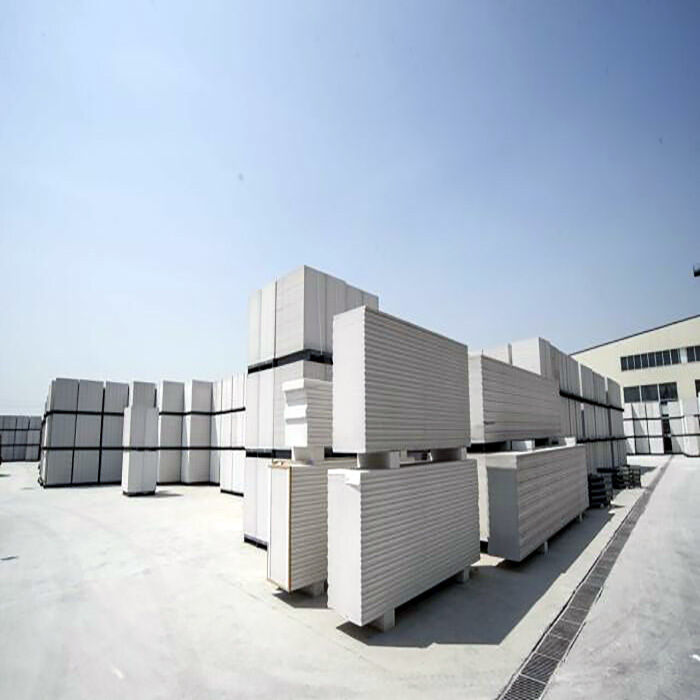
Autoclaved Aerated Concrete (AAC) block is a lightweight, porous, new-generation green wall material. Compared with traditional building materials, AAC blocks offer a remarkable combination of advantages: low bulk density, high compressive strength, superior thermal insulation performance, excellent durability, outstanding workability (easy to saw, plane, nail and hang fixtures), and high construction efficiency that significantly shortens project schedules. Based on these characteristics, AAC blocks are particularly suitable for frame structures, high-rise residential buildings, earthquake-resistant zones, and public/commercial buildings with strict energy-saving and thermal insulation requirements. They represent an ideal infill and enclosure material within modern prefabricated building systems.
2. Raw Material Composition and Supply Assurance
The production raw materials for AAC blocks are widely available and cost-effective, with most materials obtainable locally near the project site, significantly reducing logistics costs and supply chain risks. The primary raw materials include:
Fly ash or bottom ash (siliceous materials such as power plant boiler slag and industrial waste residues);
Natural quartz sand (as a supplementary siliceous component);
Quicklime (providing calcium components and supporting gas-generating reactions);
Ordinary Portland cement (acting as a cementing agent to regulate green body strength);
Gypsum (added in appropriate quantities to adjust setting time and product performance);
Aluminum powder/paste (as a gas-generating agent to create uniform pore structures within the green body).
Additionally, formulation plans can be flexibly adjusted according to local resource availability, ensuring both economic viability and supply stability once the production line commences operation.
JEFFER offers comprehensive AAC line customization services covering three capacity tiers (small, medium and large) to accommodate diverse investment budgets and market demand profiles:
| Capacity Tier | Annual Output (cubic meters) | Suitable Applications |
|---|---|---|
| Small-Scale Line | 20,000 - 50,000 | Regional small/medium building material enterprises; emerging market pilot production |
| Medium-Scale Line | 50,000 - 100,000 | Provincial/regional building material supply hubs |
| Large-Scale Line | 100,000 - 400,000 | Large building material groups; export-oriented production bases |
Standard product specifications are as follows:
Length: 600 mm (standard module);
Width: 200 - 300 mm (adjustable);
Thickness: 75 - 250 mm (adjustable);
Density Grades: 500 kg/m3, 600 kg/m3, 700 kg/m3 (customizable according to building energy-efficiency design requirements).
Product dimensions and density grades can be flexibly tailored based on client order specifications and local building module standards, ensuring full compatibility with the target market's regulatory framework.
Q1: What are the core advantages of AAC blocks compared with traditional clay bricks?
A: AAC blocks outperform traditional clay bricks across multiple dimensions: (1) Lighter weight, with a bulk density approximately one-third that of clay bricks, significantly reducing structural loads and transportation costs; (2) Superior thermal insulation, as low thermal conductivity greatly enhances building energy efficiency; (3) High production efficiency, since the autoclave curing process enables large-scale continuous manufacturing; (4) Environmentally friendly, utilizing industrial waste residues (fly ash, slag) as raw materials and aligning with circular economy policies; (5) Construction convenience, as blocks can be sawed and planed on-site with cutting and processing efficiency far exceeding that of conventional bricks.
Q2: Does JEFFER's AAC production line offering include complete equipment and installation services?
A: Yes. We provide one-stop turnkey services covering preliminary project feasibility studies, raw material formulation design, plant master planning, complete equipment manufacturing and supply, installation and commissioning supervision, trial production ramp-up, and operator training. Clients are not required to source equipment from multiple suppliers, as we handle full-line integration and guarantee overall performance.
Q3: What are the main utility and energy requirements for operating an AAC production line?
A: Normal operation of an AAC production line requires the following basic utilities: (1) Electrical power, to drive crushing, grinding, mixing, cutting and autoclave curing equipment; (2) Industrial steam, for the autoclave curing process (can be supported by coal-fired/gas-fired/biomass boilers); (3) Industrial water, for slurry preparation and curing replenishment; (4) Compressed air, for pneumatic control systems and certain process steps. Specific consumption figures and detailed utility lists will be precisely calculated and provided during the feasibility study phase based on the selected production capacity.
Q4: Does JEFFER provide ongoing technical support and spare parts supply after project commissioning?
A: Absolutely. Following project handover, we continue to offer long-term technical services including remote fault diagnosis, periodic on-site inspections, process parameter optimization recommendations, and genuine OEM spare parts supply. Our commitment is to ensure that our clients' production lines maintain consistent, stable and efficient operation throughout their full lifecycle.